«
»

Internet, leadership, Management, Marketing, Travel & Tourism

Top 5 Wrong Assumptions in Destination Marketing

01.09.12 | 69 Comments


1) Building a destination brand through advertising

You can’t. A destination brand is:

  1. The sum of experiences of a traveler during a trip (but not all experiences are equal)
  2. The sum of all stories somebody has hears about a destination (but not all sources are equally credible)

Ten years ago, your TV ads, brochures and other forms of marketing collateral contributed a sizeable portion of the stories people heard about a destination. Not anymore. People telling other people, aided by new forms of communication (including social media but not exclusively) is now dominant and has make brand advertising hopelessly inefficient.

Ensuring your destination has quality experiences, getting your operators up-to-speed in modern marketing and actively managing your destination’s reputation in social media, especially in niche communities is how you build and manage a destination brand.

2) People still like paper guides/call centers/newspapers/magazines/consumer shows/travel agents/etc.
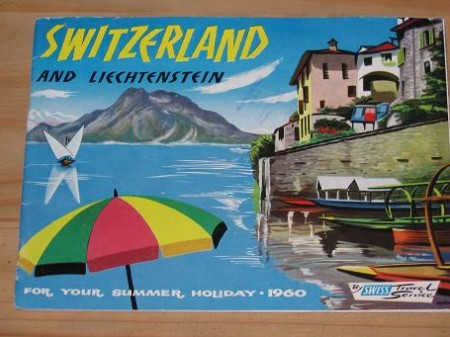
Yes they do. But is it the most effective way for you to get your stories told?

I get it. It used to be so succesfull. You’re still proud of the results from 1998. And it’s really hard to stop doing something. Staff will be effected and change management in an organization is often messy.

But lets get real. Most people have moved on. The biggest bang for your buck lays elsewhere and we both know it.

Stop making excuses, take close and hard look at your activities (budget + people) and stop doing the things that have become inefficient or ineffective.

3) Operating a reservation system will generate extra revenue

It probably won’t. And if it does, it’s going to take a lot of hard work against stiff competition.

I know it’s tempting. There’s the potential for extra revenue and your hotels are putting on the pressure to fill their rooms now instead of focussing on the long term. It’s also something tangible to measure and the technology is so easy now. And cheap.

But consumers just don’t think of a DMO website as a place to transact. They have a gazillion options to book. And usually at a much better rate than the DMO will ever be able to offer.

Making a booking system produce results is hard work.

When you choose to operate your own reservation system where your accommodation operators give you specific rates and inventory, you also need people to manage this process. That means chasing operators for rates and inventory, sending out commission cheques, chasing operators for money and dealing with customer service issues.

You’ll also need people who stay on top of your website and the conversion funnels. What advertising drives bookings? Where do people drop off in the funnel? What do you need to tweak to increase your conversion rate?

I’m not saying offering bookings is a bad idea, especially not if you’re a city DMO. An aggregator like JackRabbit is a good option add booking capabilities to your website without the operational overhead for example.

An even better option is if you have a way to differentiate yourself from online travel agents by creating value added packages online travel agents can’t offer and target these to niche audiences.

4) Processes and organizational structures from the 90′s still work today

They don’t. The workplace of the 90′s was very much a leftover from the industrial age.

Let’s see what has changed over the last 15 years. Technology and the internet has turned travel planning and booking up-side-down. Everybody knows this, but most DMO’s just added some form of online unit or department in their structure and left it at that.

And there is more! Technology has also completely changed the way people work with new productivity and collaboration tools. Technology is becoming ubiquitous. Cloud computing allows you to outsource pretty much everything and access your data from anywhere. People stay connected through mobile devices and take work home on their laptops while Social Media has completely blurred the line between professional and private life.

The industrial age is over. All of the above has completely changed the way new generations think about the workplace. Corporate structures, hours of work, roles and responsibilities, staff retention all has to be re-thought. Just read Don Tapscott and Charlene Li.

5) The one stop agency of record is still effective

It usually isn’t. More and more DMO’s are challenged with their agencies of record based on what I hear at conferences.

From my perspective, the reason why most traditional agencies are still having a hard time with digital and are often completely clueless about social is because their culture and business model is based on traditional advertising principles.

In traditional advertising, you only have one shot at getting it right. You buy the media, produce the communication pieces and let it ride. An outcome of that is getting the creative right the first time is really important. As a result, right brain creatives run traditional agencies.

In digital marketing, the creative is still important but you should spent more time after launch by looking at the data, and keep iterating the tactics to keep perfecting it. Data and real-time analysis is part of a digital agencies culture. That’s a fundamental difference.

In social media, on top of digital marketing principles, you also need to humanize the message and open up your brand for consumer input. That’s often just too much to ask.

The result is that in most cases, DMO’s need to go best-of-breed and hire multiple, specialized agencies and contractors. With the new collaboration tools, it’s much easier to manage these days. We experience this with the increased number of RFPs out there specific to social media. Maybe a new ‘agency of record’ model will emerge at some point but that will take some time.

A one-stop-shop is definitely easier to manage on an executive level. Only one RFP to run, it simplifies managing the relationship (only one person to have lunch with or yell at) and streamlines back-office accounting processes. If you still want to go one-stop-shop, look for a digital agency that also does traditional instead of a traditional agency that also does digital.

Note: I understand that especially the first and last point on this list can be perceived as a pitch for my company. The reality is that this is exactly why I joined Think! in the first place. To help DMOs innovate and break through some of the conventional wisdom out there.


  • http://www.travel2dot0.com/ Troy Thompson

    That is a hell of a list William…and I love it.  Completely agree with the points, pitch or no pitch, this is the reality of destination marketing in 2012.

    What I find interesting about point #3 and #4 is the symbiotic, yet harmful relationship between the DMO and the hotel industry.  In fact, I was just speaking with a peer about this idea last week.

    Simply put, hotels are the largest provider of monetary support for most DMOs, yet are the biggest hurdle in trying to build a long-term destination brand.

    They only want short-term gains at the expense of long-term branding.

    It seems to me the simple solution is to remove the hotels from the equation.  Find the funding somewhere else.

    Easier said than done, but for DMOs to survive it is a realization our industry will have to come to terms with.

    Good stuff.

    - Troy

    • http://www.wilhelmus.ca Anonymous

      I actually pitched that idea at my old employer once. They looked at me if I were nuts. 

      • http://www.travel2dot0.com/ Troy Thompson

        I did the same thing with that client.  As I told them, let’s get to the root of the problem.

        Your (the DMO’s) problem is the pressure from the hotels.

        Let’s get rid of that.  Problem solved.

        Simple, I know, but it is the type of critical thinking DMOs must consider.

        - Troy

      • http://www.wilhelmus.ca Anonymous

        In our case it was more to get the politicians off our backs. 

        I don’t think changing the funding source will remove the pressure from hotels. And that’s not a bad thing. As long as the role of the DMO is clear. That’s often a matter of leadership.

      • http://www.travel2dot0.com/ Troy Thompson

        True, hence importance of point 4.

        While changing the funding source won’t remove all of the pressure, and I agree, that is a good thing, it will reduce the size of their voice in marketing  / brand decisions.

        And perhaps give the leadership more strength.

        - Troy

    • http://twitter.com/bsepos Blain Sepos

      Troy, I’m interested to hear your ideas about alternatives to hotel funding of DMOs.  I imagine all DMO types have considered the options at some time but nobody else in the industry is willing or able to step up. 

      • http://www.travel2dot0.com/ Troy Thompson

        Hey Blain,

        Ah, that is the great mystery, is it not?

        To be quite honest, I have not formulated a clear response to this question.

        But, I can tell you where I am going.

        For me, DMOs and CVBs own information.  Information about the local community and the visitors to that community, etc.

        Now, if that is what we own, how to we sell against that information?  Like Google, they don’t own any of the websites in the search results, but they make money from those results.

        How can we (and should we?) do the same?

        Can DMOs actually become independent organizations to promote all of a destination without political or membership restrictions?

        When I figured that out, I will let you know.

        - Troy

    • http://twitter.com/CygnetUpdates Vicky Soderberg

      Troy – taxes and fees on hotel stays continue to provide the funding option of choice for most states and the increasing popularity of TIDs/TBIDs outside of California and Montana will bring a new layer of challenges for DMOs/CVBs across the country. 

      Hotels are a critial stakeholder and suggesting that they be removed from the equation doesn’t make sense. Wouldn’t it be better to continue working on collaboration and education instead of saying “we don’t want to play with you anymore”?

      A destination is the sum of all its parts and once you start drawing lines in the sand and excluding people you create conflict that visitors can sense.

      • http://www.travel2dot0.com/ Troy Thompson

        Vicky too, now this is a fight…I mean debate.

        Vicky, in a perfect world, I agree.  But just last week I had this conversation.  Large DMO, new TID, and already they were concerned about satisfyingly the hotels.

        The #1 metric for success: leads to member hotels.

        Why? Because the hotels viewed the TID as ‘their money.’

        Now, that is a completely ridiculous perspective, but does it make any more sense for a DMO to try and change the mind of the hotel GM?

        Plus, the DMO is now handcuffed to only promote certain hotels / members.  Can’t talk about anyone outside the TID.

        From a visitor perspective, I am more concerned that, in this case, the TID is beginning to restrict the ability  for the DMO to be the premier source of information about the destination.

        Now, is this the case with every DMO and TID?  Of course not.  I know several DMO / TID / Hotel partnership that work wonderfully.  Should hotels be involved in the DMO? Yes.

        But, is the responsibility of the DMO to get people to book a hotel room?

        Nope, that is the hotel’s job.

        TID or no TID.

        I still want to work with hotels to market the destination, I just don’t want them telling me how to do my job.

        Good stuff.  And a great comment Vicky! I love this post…I wish it was on my blog, but I will take it. Heh.

        - Troy

      • http://www.wilhelmus.ca Anonymous

        I think the membership model causes big problems. I’ve heard from DMO’s that they can’t talk about the biggest attraction in their destination because they’re not a member.

        A stakeholder model is a way better option with buy-in opportunities for operators who want to do more.

      • http://www.travel2dot0.com/ Troy Thompson

        +1 William.

      • http://twitter.com/CygnetUpdates Vicky Soderberg

        I don’t like the member scenario either. In a perfect world DMOs would be able to do their job without the politics involved in trying to keep everyone happy (and we all know how well that works).

        TBIDs are fairly successful in Montana but have been a train wreck in many California communities – maybe it has something to do with the sense of community.

        As long as state legislatures continue to fund tourism efforts via hotel taxes, it’s to everyone’s benefit to get along and work toward the common goal of a dynamic destination. Hotels need restaurants and activities to meet their guests’ needs and expectations and if you have solid hotels, people stay longer and spend more. Everyone wins.

        This doesn’t have to be a turf war…

      • http://www.travel2dot0.com/ Troy Thompson

        Okay Vicky, last comment, this box is getting small again.

        I certainly don’t think it is a turf war.  I want partnership between DMOs, hotels, restaurants, attractions, etc. It is critical for tourism to succeed.

        However, if the biggest pressures are political and membership, how do we change that model?

        How do we make destinations more successful at management and less concerned about marketing ROI?

        Again, love this conversation.

        - Troy

    • Anonymous

      In theory, you need to tax everyone who benefits from tourism. Ideally, the experience providers who are primary-draws to the destination are on the DMO board. 

      Would be tough to convince people, but I think some destinations where the entire economy is dependent on tourism (like Sun Valley) have a local options tax on all businesses.

      • http://www.travel2dot0.com/ Troy Thompson

        Hey Rodney,

        Completely agree.  Taxing tourism-related activities to fund tourism promotion is clearly the ideal way to proceed.  In a perfect world, that should work.

        However, as Anna pointed out, and as we have all seen over the past several years, when politicians need money, they look at every penny collected via taxes.

        My thought is, let’s remove that temptation.  How do we get away from that model?  How does a DMO control their own destiny…and budget.

        Tough question, I know.

        And at the same time, I know ‘more taxes’ is not the ideal answer.

        - Troy

  • http://www.tommartin.typepad.com Tom Martin

    Interesting take William, but I’d have to say on #1 — that you might need to pick up a calculator and run the numbers. While social is surely the shiny object de jour, it’s single greatest weakness is scale, which coincidentally is advertising’s single greatest strength. Additionally, the truly epic social campaigns start and stop, just like a traditional ad campaign does… which then requires the same “get it right the first time” effectiveness.

    The future, IMO, belongs not to one or the other but a well crafted blending of both, which coincidentally, the companies most well positioned to pull it off — yep, those full service shops you dog in the final point.

    Now the one area we completely agree on — the definition of “full service” shop will surely morph or a new breed of digital integration specialist or agency will emerge to lead the other executional level agencies…. I penned a bit more on that topic over at Ad Age some time back… http://adage.com/article/small-agency-diary/advertising-5-0/130059/ be interested to hear your 02 on that…

    But overall, I think destination marketers, as well as all marketers, step back and do a serious reconsideration of all channels and practices. Again, something I think we agree on… It’s a brave new world that is increasingly becoming digitally centric and thus, change and our ability to stay up with that change is accelerating at an unprecedented pace… for which all marketers must develop a way to stay in front of….

      @TomMartin

    • http://www.wilhelmus.ca Anonymous

      Thanks Tom. Great insights.

      As far as #1, my point is that the sum of the stories people tell each other (in person and online) is much larger than the stories the DMO can put out there. At the top of the funnel, instead of advertising, DMO’s need to work on increasing the number of positive conversations and increase them by giving consumers reasons to talk about remarkable experiences. Lower down the funnel it makes more sense to connect directly with consumers.

      • http://www.tommartin.typepad.com Tom Martin

        Still think the math doesn’t support the point William. Unless a DMO has millions of folks visiting and talking… scale becomes a very hard thing. The average person just doesn’t “know” that many folks. We social folks forget that not everyone has hundreds of friends on FB or thousands of followers on Twitter. 

        But love your point on remarkable experiences… that I can totally get behind.

      • http://www.wilhelmus.ca Anonymous

        Any piece of research I’ve seen about “why did you visit” includes “heard it from a friend” in the top, if not #1. Even before the internet came along.

        Word-of-mouth was and is the most important influencer in the consumer decision making process. Social Media has made it visible.

      • Anonymous

        Loving this debate. Tom, you need to come visit in Vancouver for a beer session.

        In terms of scale, I have a sneaky suspicion that there’s a close correlation between the number of hotel beds in a destination and the number of conversations (online and offline) about that destination. 

        So, Moab doesn’t need as many advocates talking about its’ experiences to fill its beds as New York would.

        The average Facebook user has 130 friends, 190 in Canada (go Canada).  People talking about you is free, so in terms of cost, its very scalable.

    • http://www.travel2dot0.com/ Troy Thompson

      Yes, now Tom is in the fight.  Good to see you Tom.

      The takeaway from point #1 for me is the funding required to run a large, traditional advertising campaign…funding that most DMOs lack.

      Take the BP oil spill.  Aside from Visit Florida, most of those beach communities did not have the resources to run a TV or print campaign to counteract the negative PR about oil-filled beaches.

      But social gives them a real-time chance, plus, the majority of the conversation, to William’s point, is already happening on social media.

      I don’t think the issue is that DMOs don’t want to use traditional ad tactics, but simply the cost, time and ROI don’t make sense.

      As for the blending of both traditional and social messages.  Yes, 100% agree with that tactic.  But I don’t think our traditional agency brethren are in the best position to pull it off.

      Good conversation Tom, thanks.

      - Troy

      • http://www.wilhelmus.ca Anonymous

        Yeah, that’s a good point Troy. It’s a matter of applying your resources effectively. 

        The great thing about tourism is that it’s diverse and something people already talk about. Social Media and tourism are a match made in heaven because of it.

        Compare that to soft drinks. Coke and Pepsi have pretty much identical product. Building brand through advertising is the only way to make people believe one is different from the other.

        By the way, what do tourism folks think of the BP commercials Tom? 

      • http://www.travel2dot0.com/ Troy Thompson

        True, I don’t often find myself reminiscing with friends about that wonderful Diet Coke I had yesterday…

        - Troy

      • Anonymous

        I love that anology. Ironically, even Coke is rolling over: 

        “Five years ago social media was 3% of our total media spend. Today it’s more than 20% and growing fast.”

        http://hbr.org/2011/10/shaking-things-up-at-coca-cola/ar/1

      • http://www.travel2dot0.com/ Troy Thompson

        I had a major…and I mean major…DMO tell me they were considering going completely digital, with a focus on social.

        5 years ago, that would have caused panic.

        In 2012, it sounds pretty reasonable.

        - Troy

      • http://www.tommartin.typepad.com Tom Martin

        Troy,

        I prefer debate…. but….

        Yes, social gives a voice to a budget strapped local but again, unless the DMO has a large enough audience to listen… the story still doesn’t get told.

        As for our traditional agency brehren, don’t kid yourself. They are absolutely in the best position given the financial, human and research resources required to truly integrate traditional and digital storytelling… the only thing holding them back is themselves.

        But rest assured, if a few of them would really decide to make a move… watch out…

      • http://www.travel2dot0.com/ Troy Thompson

        Ah, let’s just call it a fight…besides, it is only the 3 of listening to this conversation. Ha!

        Well, ideally, the DMO would use their social advocates to spread the message.  The size of the DMO social following only needs to include those advocates to start spreading the idea.

        And I agree, traditional agencies do have the financial, human and research capabilities required, but I don’t think they can overcome their own egos (themselves) to actually get it done.

        And their is not much time left.

        Make no mistake, JWT, Grey, etc. will survive.  I am talking about those mid-level shops, and specifically some in the tourism vertical, that need to decide what they want to be.

        - Troy

      • http://www.wilhelmus.ca Anonymous

        Can we do this over a beer next time? 

        Traditional isn’t going anywhere and neither are their agencies. They’re good at it. It’s just not effective for most DMOs.

      • http://www.travel2dot0.com/ Troy Thompson

        I agree, on both counts.

        Man, this box is getting small…

        - Troy

  • http://twitter.com/bsepos Blain Sepos

    Talk about generating conversation!  Great list, William, and I enjoyed reading Tom and Troy’s comments.  

    I agree with your points other than number 2.  Even then, my disagreement is more about visitor demographics / age application than anything.

    Cheers!
    Blain

    • http://www.travel2dot0.com/ Troy Thompson

      Ah, come on Blain, I need you to pick a side.

      Tom and I know we are great, but who is right? Heh.

      - Troy

      • http://twitter.com/bsepos Blain Sepos

        Ha!  I’ve always worked with / for small DMOs.  I’ve never had huge budgets to brand build via agencies and large traditional advertising campaigns.

        These smaller destinations also have smaller audiences so the scale challenge Tom mentions rings with me too.  

        Man, this fence is uncomfortable.

        Blain 

      • http://www.wilhelmus.ca Anonymous

        You’re a good example Blain. Parksville has a great reputation in the region. People come back and recommend Parksville to their friends. As a result, Parksville is an established tourism destination. 

        And the DMO is doing a great job uniting industry and locals while providing good information to consumers.

      • http://twitter.com/bsepos Blain Sepos

        Thanks William, we try!

      • http://www.travel2dot0.com/ Troy Thompson

        Alright, as long as it is uncomfortable, I will let you stay there.

        - Troy

    • http://www.wilhelmus.ca Anonymous

      I get your point regarding #2. But the problem is that fringe cases often turn into justifications for things that don’t make sense in most cases.

  • Anonymous

    Great post William and you
    know personally that I am in agreement with you and so glad you have opened up
    the debate so powerfully. But I’d like the debate to go deeper – almost to
    where it hurts…

    1.    
    What is
    and should be the role and focus of DMOs in an age when everyone can be an
    intermediary? The cost of setting up a destination web site has dropped
    dramatically while the market continues to fragment geographically,
    psychographically and demographically. Furthermore the number of channels to
    market shows no signs of diminishing and the number of technologies that need
    to be mastered is also accelerating. DMOs simply don’t have the financial
    resources to keep upon all these fronts and, given that many are run by their
    private sector members, no longer enjoy a reputation for being the impartial
    trusted authority. So instead of doing I have argued that DMOs should see
    themselves as both enablers and curators. Why not create the platforms and load
    them with tools that enable others to express what the destination means to
    them and send out the invitations?

    2.     Can and should a
    DMO put so much energy and expense in trying to develop and control
    artificially produced brands that are static, externally imposed and created
    from the imagination of a few when the real brand = the personality of a place
    and is emergent, highly subjective and very dynamic. The biggest challenge
    facing DMOs is the need to address “the sea of sameness” and to really dig deep
    into unearthing and expressing the uniqueness of each Place. Only by
    establishing its scarcity (a function of its uniqueness) can we expect to get a
    higher return from the visitor.

    3.     Is it not time to
    examine the KPI’s of the DMO?  Most
    are measured according to the volume of visitors to a destination regardless of
    their type and net benefit to the community as a whole. Hoteliers, who do
    dominate the membership of CVBs, are justifiably for them, focused on short
    term occupancy and ADRs but unable to take a long term view and often block
    strategic changes in direction. Because politicians are addicted to growth,
    DMOs tend to set overly ambitious growth targets that encourage more investment
    that actually undermine the competitiveness of existing suppliers. The tide of
    tourism demand flows in and flows out according to a host of factors outside
    the control of the DMO and its members. When it flows in, DMOS and members take
    credit and get more bullish and push for more growth in supply. When it flows
    out, suppliers drop their prices, margins thin, their resilience to further
    shocks weakens and the market is convinced they can always find more for less.

    Name me a DMO that can report with accuracy the net benefit of tourism to its
    community? To do that it would have to identify all the inputs and measure all
    the costs.

    If it is true that 70% of referrals occur after a customer’s expectations have
    been exceeded and that 80% of people seek recommendations from trusted peers
    before making a major travel service, why is customer service given relatively
    little attention by DMOs? Why are Visitor Centre personnel given less status
    and budget than those in marketing and sales.

    I could go on but the comment box is small – I guess I’ll have to blog as well!    

    • http://www.travel2dot0.com/ Troy Thompson

      Anna, that is wonderful.  Adding anything more would be an injustice to that comment.

      I will say this, the only way forward is by having these types of conversations…uncomfortable, painful and controversial.

      And so, so wonderful.

      - Troy

    • http://www.wilhelmus.ca Anonymous

      Thanks Anna, I can’t believe you can write down a stream of consciousness like that. Took me hours to think my post through.

      I think the fundamental point is the role of the DMO. The “M” needs to change from ‘Marketing’ to ‘Management’. And it goes beyond customer service. It starts at the design of the destination experience. 

      The DMO is the only organization who presents the whole basket. The operators are the ingredients of the basket. The DMO needs to take a leadership role in the design of the complete tourism experience.

      That includes things like the airport experience, border experience, taxi rides, friendliness of locals, etc. All consumer touchpoints during the trip impact the brand perception of the consumer and ultimately the stories they will tell others.

      Many DMO’s haven’t thought about this in the level of detail it requires. 

    • Chris V

      Anna, I think you make a really key point towards the end of the great observations you have and points you make.

      You ask a really important question, which is so often ignored ‘why is customer service given relatively little attention by DMOs? Why are Visitor Centre personnel given less status and budget than those in marketing and sales.’

      William, in his excellent piece makes the point well about how tourism has changed and how DMOs can be sidelined so easily as there are many channels that people can and do use to influence their choice.  This means that as part of marketing now, it not just traditional push and pull factors; good copy, amazing images, fantastic offers etc, that form part of the information and marketing, but it is the actual experience of individuals themselves.  So I do think we do need to start thinking of marketing in a different way, in the sense that product and service development is part of marketing and it cannot really be ignored, yet I fear it is , as massive amounts of money can be given over to TV campaigns and other marketing activities by Governments and DMOs yet they have little focus on service delivery and quality of product which if disappointing can be transmitted around the work in an instant!

  • http://www.linkedin.com/in/rayfreeman Ray Freeman

    What an amazing discussion!  I have to agree with William that the “M” should be “Management” rather than just “Marketing”, however; with the economic downturn, many DMO’s have divested themselves of staff and community development programs to keep their heads above water and have reverted to traditional habits.  This is a slippery slope where it is becoming increasingly more challenging to be heard above the volume of marketing noise.  Anna is right on the money with the Conscious Travel movement…we need to focus on unique destination experiences in order to avoid commoditization.  As for membership versus stakeholder models, I have been involved in both, and while I believe that stakeholder-oriented DMO’s provide a vehicle for more effective “Management”, those with membership models may struggle to map out the transition to a stakeholder model. In both cases, in theory, all stakeholders benefit from the efforts of DMOs. Those stakeholders who cannot participate in the programs of membership based DMO’s, will find other marketing channels.  Ultimately, stakeholders, and destinations would benefit most from more intensive collaboration across local, regional, provincial/state, and national DMO’s.

    • http://www.wilhelmus.ca Anonymous

      Thanks for jumping in Ray.

      I’m worried that  business as usual (or business from the past) will lead to ineffective results displeased stakeholders and a downward spiral as a result. 
      I agree with you comment about Anna’s movement.I think there are plenty of DMO’s who have a successful membership model but I’m sure that if most of us had to start a new DMO we would avoid a membership model.

  • Anonymous

    William – DMO as orchestrator/stage manager/conductor/chef?? Like it. A conductor keeps time and ensures the orchestra is in tune. The tune is the personality of the place – its essence; its spirit that makes it unique, authentic. 

    Have been giving this a lot of thought as part of my work on Conscious Travel — the new paradigm has a different set of Ps 
    See: http://www.conscioustourism.wordpress.com where I’ve re-written the home page. 

    So I’ve been thinking about the changing role of DMOs for that. More streams of consciousness – so pleased to be able to discuss here…..

  • http://twitter.com/hildecs Hilde Ch. Solheim

    Thank you William and Anna, this was straight to the point!

  • http://twitter.com/gonzogonzo Frederic Gonzalo

    Wow, just read your post, along with the 38 comments under it… ;-)
    This is a phenomenal discussion, one that is most certainly needed here as well, in Quebec, where I find there are too many destinations (cities, regions, sectors, etc.) fighting over scarce marketing budgets to shine outside the province or outside the country.

    Not much to add after reading all the back-and-forth in the comments area, though. And I must say Tom Martin had some compelling arguments about point #1, but so do you, William. I get I sit in-between you too on this one…

    • http://www.wilhelmus.ca Anonymous

      Thanks Frederic. I will follow-up on #1 point soon. I’m glad it made people think.

  • http://twitter.com/victoriaisley victoriaisley

    I continue to be amazed at “this versus that” lists like this for DMOs. There is no “one size fits all” solution – and the strategy for a savvy DMO marketer is the right blend for the right place. It’s a blend of media – paid (advertising), earned (PR & promotions), owned (webiste and collateral) and shared content (social) and being able to deliver and foster that brand essence that only a particular destination (along with the right mix of company of course -whether it be solo, friend, family, paramour or your dog!) can deliver.

    • http://www.wilhelmus.ca Anonymous

      Thanks for participating Victoria. I agree there is no one-size-fits-all solution and there will always be a mix of different strategies and tactics depending on the DMO.
      There’s a lot of great work done by DMOs around the world. In my opinion though, there’s a lot of business as usual out there as well, for a variety of reasons. 

      This post hopefully helps start/continues a debate about some of these things. Looks like it worked ;)

  • Rob Hughes

    Great article. A few thoughts…

    I have to support Tom’s point and while I agree social provides many benefits (word of mouth, guest experience, reach, etc), the numbers don’t yet support it alone. It should definitely be part of a greater strategy complementing the communication mix. Social success stories are still rare and often unplanned. There is no doubt that word of mouth and social sharing are primary motivators but these are driven by quality experiences, not the
    destination marketing team.

    I’m glad you pointed out the need for destinations to educate operators and create value-added packages.

    Often though, I’ve found that destinations don’t fully understand their sales channels and the path to purchase. Many attempt to create or request fluffy, wonderful experiences with very specific inclusions that in reality have little to no consumer demand, and then wonder why results are poor.

    While I understand the need to position experiences in the
    destination, there needs to be a cooperative effort in understanding customer needs and desires. By combining market intelligence with insight from retail channels, the destination marketer would be far more effective.

    I also see a number of destinations still using pricey ad agencies where smaller, more creative agencies can be FAR more effective while reducing costs.

    • http://www.wilhelmus.ca Anonymous

      Thanks Rob, great thoughts. Thanks for joining in.

      Point #1 is a matter of efficiency. And I’m not dismissing advertising altogether. I’m dismissing building brand through advertising. It’s just inefficient.Although the experiences aren’t driven by the destination marketing team, I believe it is the role of the DMO to take a leadership role in creating the vision for the destination and ensuring that experiences are remarkable. That includes things typically overlooked. I saw this great presentation once from the Bahama’s minister of tourism. They ran a program to educate their residents how to be friendly and helpful to tourists for example. 

  • http://buhlerworks.com/wordpress JEBworks

    Well, well. There is some major brain power on display here!

    First off, William, great thought provoking post. Also, I like the photo in item 2 especially….! There’s a destination with a national DMO that has been around for close to a century and where I’ve spent nearly a quarter of one working on, thinking about and grappling with the issues you raise, some of which have been around since way before the web. For instance the membership, brand building, multi-channel distribution, partner education and more.

    When addressing most issues it helps to put the customer at the center of the equation and define his/her needs and expectations, aspirations and needs. Second, look at the destination website as the core engine for your marketing effort in the 21st century. Working from these two key elements outward to find the ideal solutions to the myriad challenges seems to me a solid basis.

    In the past fifteen years or so, the marketplace has undergone some fundamental changes how people interact with each other, with brands, inform themselves and arrive at purchasing decisions. All businesses, including DMOs have to define their role in this context. There has never been a better time than today to discard old and tired approaches to how business was done in the past.

    DMOs have to stake a claim for the leadership role in their destination or they will become increasingly irrelevant soon without a valid proposition that justifies their continued funding and support by their constituents. Defending the status quo is the fastest way to oblivion.

    Anna has very eloquently put some issues on the table that need to be addressed urgently by those who want to step up and remain in the game. Not doing so, due to the daily grind and short term problems which obviously need to be faced and solved is not an option. There are enough people offering a range of services to assist DMOs in finding the most effective solutions to some of their main issues. Not to make the resources available to engage with these innovators is very shortsighted management.

    • http://www.wilhelmus.ca Anonymous

      Hey Joe, I was wondering when you were going to join the party. Glad you like the photo in #2 ;)

      Thanks for adding your thoughts to the conversation. I completely agree that more than ever the consumer needs to be in the center. 
      Looking forward to more discussion.

      • http://buhlerworks.com/wordpress JEBworks

        Better late than never, I guess. Happy New Year, by the way. Hope it has started off well for you.

      • http://www.travel2dot0.com/ Troy Thompson

        Joe, you were wise to wait until the real battle was finished. Ha!

        Love, love your point: Customer first.

        I might just re-post that comment on my blog, so good.

        - Troy

      • http://buhlerworks.com/wordpress JEBworks

        Troy,

        We Swiss are neutral, you know! We don’t join in fights ;)

        Being customer centric seems to me the only option, especially since – as William states correctly – the brand is the sum of all customer experiences.

        Not featuring a popular attraction, or hotel etc. because it is not a member is blatantly ignoring the customer. That’s when you can prove, whether claiming to be is true or only an empty statement.

  • http://digicate.ca/ Jason Baker

    Wow, William, great discussion here! 

    As someone that is pursuing the travel industry this gives a lot of great insight into the current situation and challenges for someone that may be of a progressive mindset. I’m going to sidetrack a little bit. My question or point-of-view may coincide with the discussion around hotels funding DMO’s, etc.

    After speaking at the World Hostel Conference in December, I am amazed at the opportunity that is currently untouched in North America. I’ve read a lot of comments and points-of-view on the challenges DMO’s face with social media and the generation of content. I completely agree with your #1 point, in that the word-of-mouth (online or offline) generates more content, stories, or comments about a DMO than any DMO could create. 

    My thinking to that is DMO’s and travel in general around North America has to be more accommodating to hostels and backpackers. I understand that major challenges exist with property zoning, hostel reputation, lack of trade associations, hotel funding battles, and transportation around North America. However, there has to be a way that all major interested parties in tourism can get along.

    As you and your fellow agency mates know, Australia has a big backpacking industry that supports and recognizes the hostel backpacking community. I haven’t been able to find recent numbers, but in 2006-07 Australia generated $3 billion in revenue from the backpacking industry and long-term travels spent a 2:1 ratio on short-term travellers. Without looking at turnover rates, it’s hard to know exactly how comparable this is to short-term travellers. 

    Given the current economic situation, I would imagine there is a strong opportunity for DMO’s to benefit from the backpacking industry. Online, there is a very strong network of socially engaged travellers, backpackers, or nomads all around the world. Long-term travellers typically know the best cultural, adventure, and foodie-like experiences in the cities they travel. Without knowing statically, I would also say they generate the most valuable content online. 

    Also, those that have backpacked or travel long-term around the world are now starting to open up hostels in North America that are vastly different and unique to the negative image hostels have. My point is that I believe there is a significant opportunity to increase travel within North America amongst 18-35 year olds if someone is willing to take that risk as a DMO. It’s a niche risk, but one that I think would greatly benefit the experience, image, and reach of a city.

    I backpacked through Chicago, NYC, Boston, and Toronto over a two week period this past year. Four major North American destinations that many people my age would love to visit. Also, from a social side, here’s what is coming in terms of content… Real-time shared experiences. 

    In Chicago, I was fortunate enough to see the 40th Anniversary of Soul Train. Not only that, I was able to call over Facetime to my parents iPad and broadcast this once in a lifetime experience. I was able to share and communicate in real-time with them while I socialized with the locals and gave them a tour of the skyline. Recently, I just found out that there is a Kickstarter project currently underway from the former designer of the Flip Camera to create video enabled glasses. These glasses would connect in real-time to the internet and all major social networks. Think of the amount of content one could produce around a city wearing those!

    Anyway, I look forward to any comments you may have… Sorry if I sidetracked a bit hear, but I’m interested if others have some thoughts on the hostel/ backpacking industry as an alternative option in North America.

    • http://www.wilhelmus.ca Anonymous

      Thanks Jason.

      I think the disinterest from some DMO stems from a revenue perspective. Hotels charge more per night and a DMO’s funding model is usually tied to a hotel tax of some sorts. It’s also perceived (right or wrong) that backpackers spent less money while traveling.But besides the change in the quality of the product, the backpacker of today is a hotel guest in the future. And a backpacker could very well be an influencer in his or her own network.

      Hostels will receive some stiff competition in the future from sites like couchsurfing and airbnb but it sounds like they’re already reinventing themselves. 

      • http://digicate.ca/ Jason Baker

        Thanks William! Yes, I certainly understand the challenges hostels and tourism faces as the current funding model is very much attached to hotels. I wonder, is that part of what has to change as well? Has that current model been around for years, and like the industrial age, is ready for a change?

        You’re certainly right, that the backpacker of today is a hotel guest in the future. We’re also starting to see more interesting “hostels/hotels” combinations, such as The Pod Hotel (http://www.thepodhotel.com/) in NYC. This is obviously an attempt to “sexify” or improve the image of a hostel and improve the social activity in traditional travel settings. 

        Recently, NYC billionaire, Ron Burke announced he’s investing $250 million into hostel properties in various major USA markets. He’s planning to create premium luxury hostels that charge 30% more than a typical hostel (http://online.wsj.com/article/SB10001424052970203710704577054220884980872.html).

        Yes, Airbnb is viewed as a competitor to hostels, but in actual reality, they’re not. Several hostels at the conference mentioned that they list their properties on the site and Airbnb encourages for them to do so. Of course, most of the listings are for individual private rooms.

        I think my point is, that in North America, the backpacker’s of the last 5-10 years are now wanting to create a backpacking experience in their own backyards. Is it time for the revenue model in tourism to change in North America? What is it in Australia? Why do they view backpackers market as an opportunity to create a niche market around? 

        I honestly believe that over the next decade or two, North American backpackers will start to push the boundaries of tourism in our society. Perhaps boutique hotel chains that offer hostel like services and amenities will win out over independent hostels? I don’t know. I just think there is a niche opportunity being overlooked in North America for the future of tourism. I could be wrong. I know from a social and community management angle, hostels and backpacking are a win win in social media.

  • http://twitter.com/jeroen_beelen Jeroen Beelen

    Great post William! Having set up and run a DMO in the lovely town of Delft (The Netherlands) for 8 years, much of the discussion is very recognizable. The travel industry is in some ways both very traditional and very progressive. In a lot of ways they are in the forefront when it comes down to new technology being used, but in others fronts nothings seems to have changed for decades.
    At the Delft DMO we printed information brochures in 5 different languages (Dutch, English, German, French, Spanish). Some in a circulation as small as 7.000 copies (of which we had to through away 1/3 at the end of the season as they hadn’t shown up in the numbers we expected because of the start of the economic crisis). Very cost ineffective! 
    But from a visitor point of view: some nationalities would get very upset if we didn’t have a brochure in their language… Lots of visitors still seem to want to hold on to a piece of paper.
    Concerning the role of the DMO, this is another big point that needs to be discussed in a lot of places. I had some tourist entrepreneurs tell me they joined my DMO to support me. I really hated this. My whole set up and execution was to prove to them that it was economically sensible to join our DMO (but some didn’t seem to get it). A DMO should not act or be treated like some kind of beggar holding up it’s hands and hoping someone noticies him. Like you say, a DMO is the only one that looks at the destination as a whole.
    As a DMO can not and should not promote a destination by being a ‘solo artist’, but should work together with it’s local partners, what’s your take on bringing these partners up to speed with the ‘new social world’ and all it’s changes? I recently talked with a hotel GM. When I noticed that his hotel was being followed by quiet some people on twitter, but that they hardly followed anyone back, he just said ‘he wasn’t interested in reading all these people’s stories’. And he’s not the only one.

    P.S. Looking forward to you bringing this discussion to The Netherlands and Europe!

    • http://www.wilhelmus.ca Anonymous

      Bedankt voor je bijdrage Jeroen.

      I think many DMOs could work closer with their local partners. This needs to be conducted in a new relationship with a lot more collaboration, especially down at a tactical level. 

      Things are often messy at the top from a political perspective. But when you get down to the people who actually do the work, they just want to implement great things and do what’s right. 

      I see an opportunity right now for DMOs to lead their industry through the current impact of social media. Many operators are desperate to understand social media and get training and guidance about what to do. 

      The DMO can take this opportunity to not only provide this education but also make it fit within a destination-wide social media strategy.

      After all, a destination brand is shaped by the stories people tell each other. Ensuring operators generate and engage in these stories in the right way is an important piece for a DMOs social media strategy.

      Right now we’re working with a few of clients to actually make this happen.

  • http://twitter.com/claudebenard ClaudeBenard

    Thanks for this great posts and comments.

    It’s also interesting to view think at the top level.

    For a “smile” example, look at the title of the minister of tourism :)

    In Indonesia >> MINISTER OF TOURISM AND CREATIVE ECONOMY

    In France >> secrétaire d’État, chargé du Commerce, de l’Artisanat, des PME, du
    Tourisme, des Services, des Professions libérales et de la Consommation

    Meaning, the ministre of tourism in France don’t have the hierachic level of “Ministre” and the man is also in charge of SME’s, Services, commerce, artisanat, self-employed professionnals, consumption area, ….etc…etc…

    And France shout out she is the best tourism country in the World!

    Find the errors :)

    Best

    Claude

    • http://www.wilhelmus.ca Anonymous

      Ha. That is an interesting way to look at it. It’s a double edge sword for the DMO though. One the one hand, a dedicated minister shows priority and commitment. On the other hand, a minister with nothing else to do could have some ideas of his/her own…

      • http://twitter.com/claudebenard ClaudeBenard

        You know the French maxim ?

        Why make it simple when you can make it complicated!

        French DMO’s (and other in the World) love this way :)

  • Nancy

    Thanks William – bang on!  I agree with you. As more and more DMOs switch from a ‘marketing’ (aka promotions) mandate to ‘management’ it will prompt more holistic thinking about how customers want to engage with people, places, and the DMOs that market them. Never before has the customer lifecycle been more important … and yet, Tempkin’s research shows only 7% of companies TRULY walk the talk in setting up processes that align with the new world. The good news – lots of opportunity to evolve with the traveller and how they want to engage, connect, communicate!

    • http://www.wilhelmus.ca Anonymous

      Thanks Nancy. I can smell change in the air. Some DMOs are already moving towards a new model. There will be a tipping point soon.

  • http://twitter.com/Roamancing Roamancing

    Love this post.  Some good advice to DMOs.  Love that you gut straight to the point and make no bones about it.

    • http://wilhelmus.ca wilhelmus

      Thanks!

  • Pingback: Wilhelmus » Blog Archive » 5 levels of social media sophistication at the DMO

  • Kfischang

    Agree with all but #2 as we did reserach and it was determined that we still need to do all of the paper stuff too.  Also at least 50% of our destination is rural with no WiFi or internet access- some folks come here to get away from that – so without maps, guides & brochures our visitors would be out of luck.


«
»