
We have been talking about the need for change in our industry, and society, for a long time. And there was always an excuse to keep the status quo, change slowly, or only in the margins. When the impact of the pandemic hit in March 2020, change wasn’t only possible, it came fast and effective.
Business processes, operations, and even business models were reinvented almost overnight. The following weeks and months these new ideas and concepts were improved upon to a point where we’ve almost fully adapted to the current reality we live in. Some governments all of sudden were able to finance the necessary restrictions on businesses and people’s livelihood. A vaccine was developed at warp speed, faster than ever before.
That doesn’t mean there has been no impact. Many people in our industry have lost their jobs or businesses they took years to built. For many, 2021 will be another very though year. But some of the early and dire predictions of the impact and length of the pandemic haven’t come to fruition.
It demonstrates that when the collective will exists, or the necessity because of a crisis, rapid action is possible.
It’s a new year and I’m sure we’re all looking forward to leaving 2020 behind and more than ever, have a fresh start.
The Holidays gave me time to process many of the things I’ve learned. Both in my professional and private life. I was also thinking about my blog here, sitting dormant for about five years. It’s not that there’s nothing to say. I’ve just switched to sharing many of them on the Destination Think blog.
But there are always more thoughts, ideas and questions floating around. And some of them I’d like to share. Because I’m also interested in other peoples perspectives and discussions.
May January first 2021 be a new beginning for my blog. Let’s see where the journey takes us.

photo: David McSpadden
Paris is removing the love locks from the Pont des Arts bridge.
For years couples have attached little padlocks to the bridge as a symbol of their love. Newlyweds or newly engaged couples travel from all over the world and one reason for their visit is to attach a lock to the bridge. But the bridge is collapsing under the weight of hundreds of thousands of locks. The city stepped in and and said “no more”.
I’ve written about this phenomenon before. Sharing experiences, traditions and superstitions are very powerful motivators. People throw coins in fountains, rub statues and kiss rocks for all kinds of reasons, all over the world. These traditions can be very powerful drivers for tourism, how strange this might sound. Travel often lacks a sense of urgency. You can visit most destinations any time in your life. Paris will still be Paris ten years from now. Mona Lisa will still be the same and so will the Eiffel Tower. But with a tradition tied to a life event such as engagement or marriage, the emotional connection acts as a catalyst.
Paris is putting a halt to it. I understand the safety concerns but here’s what I don’t get. They are taking away a strong motivator for travel. Why not give people an alternative? A new place to place a lock. It would be so simple. Hire an artist to create a sculpture with the purpose of attaching locks. Build it in a way you can remove locks from time to time. The coins from the Trevi fountain in Rome are also collected at night. I can guarantee that without an alternative, people will just move on to the next bridge, or not show up at all.
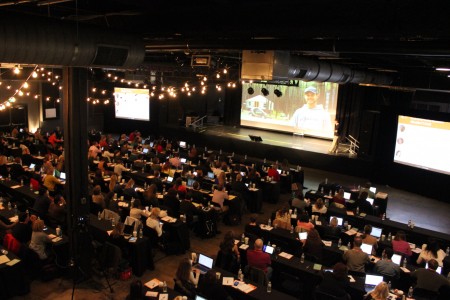
#SoMeT14US in Nashville
I have the privilege of attending our SoMeT conferences on three different continents. The learning is incredible. Both from the speaker content, and also from speaking to the attendees. It helps me a lot in my work.
A question I get asked a lot is if there are differences between DMOs in different parts of the world, their challenges and their approaches to solving them. The answer is: yes and no. The challenges are very similar but the approaches differ. I think the regional differences are partly cultural but also influenced by the “neighbour effect.” People pay close attention to the DMO next door, and then this is reflected in their own strategies and tactics.
For this reason, it’s interesting to attend a SoMeT conference on a different continent. You’ll see a different spotlight shone on familiar challenges. It can be very eye opening, and will inspire you to try new ideas and approaches. I know it does for me. Not to mention the fact you’ll also make new connections with your international peers.
It might be a tough sell to your boss or board. The optics and psychological barrier of an intercontinental flight (and costs) to go to a conference when there are options closer by is challenging. But when you put it in terms of value, the additional cost are minimal compared to the value it delivers. We’re talking a few hundred dollars.
So keep an eye on our conferences around the world and what they have to offer. #SoMeT15EU will be held in Amsterdam.
Tags:
#somet,
conference
I’ve worked at a destination marketing organization for 11 years, and have spent the last 4 years at Think! where I’ve worked with more than 100 DMOs from all around the world. And a big challenge for every DMO is managing their industry stakeholders. The politics. Proving value and relevancy.
Even if well-intended, I don’t think industry stakeholders truly understand how their actions can impact the efficiency and effectiveness of their DMO.
If you’re a tourism business, this is what you should know about DMOs:
1) A rising tide lifts all boats
You might compete with other businesses in your destination, but the reality is that when more people want to visit your destination, everybody benefits. That’s the marketing job of the DMO. To get more people there, get them to stay longer and spend more money. Your DMO needs to focus on the things that make your destination unique and the things that make people want to visit. You might not like it, but some experiences/businesses are more important drivers for tourism than others.
Don’t take the view that that big attraction doesn’t need additional exposure, because you’re completely missing the point. The Eiffel Tower makes people want to visit Paris, while the café down the street probably doesn’t. Tourism Paris needs to promote the Eiffel Tower, not the cafe, lovely as it might be.
What you should do: let the DMO work by focussing on the things that will make business better for everybody, even if that means giving more exposure to certain products than others.
(And while we’re on the subject: if your hotel/restaurant/tour etc is booked out when a visitor enquires, why not recommend a trusted partner business? You’re not losing business to a competitor, you’re gaining a visitor to your destination and working together to raise all boats.)
2) A DMO isn’t responsible for your sales
With the exception of few cases, your DMO shouldn’t put their time and effort into selling things. It’s a waste of resources. Once someone makes the decision to visit, there are legions of other places where people can buy packages, flights, hotel rooms, etc. These organizations are much better at it than your DMO. Your DMO doesn’t need to do this.
What you should do: Don’t see your DMO as a sales channel. Your DMO sells the destination experience, not tickets or reservations.
(Note: some city DMOs have very successful booking systems, ticket services and city card programs, but these are the exceptions.)
3) DMOs need to take a long-term view
As a tourism business, you worry about next month’s sales. And if they don’t look good, you might look at your DMO to try and fix it. In some cases, that’s valid (think the BP oil spill). But in most cases, it’s not. Your DMO should take a long-term view (especially your state/provincial/national DMO) to build your brand, reputation and demand for the long term. If they don’t, other destinations will win in the long run.
What you should do: Let your DMO take a long-term view for the ongoing growth of tourism in your destination.
4) People working at the DMOs are passionate about you and your business
DMOs are often publicly funded. That comes with specific complications. They’re under a lot of political and press scrutiny. If they make a “mistake”, it can be used by politicians in the opposition, or result in negative press. Both can have very bad impacts on funding.
This situation can make things frustrating for you. But guess what, your DMO people are often very frustrated by bureaucracy…they just won’t tell you that. I’ve worked at, spoken to and worked with hundreds of people working for these organizations and they’re almost always the most dedicated professionals who understand their responsibilities. They love where they live, what they do and want to make you successful.
What you should do: Lose the scepticism, and learn to collaborate and support the staff of your DMO. They’re good people who need your support, especially when they’re impacted by politics and press.
5) Stop evaluating marketing based on how it looks
It’s very easy to have an opinion about marketing based on what it looks like. “I like this ad/I don’t like that one/I like the colour of this website/I don’t like that one.” Often this involves the competition. “Those TV ads from Destination X look much better than ours”. Or worse: “Why don’t we advertise on TV, the way the DMO next door does?”
Because industry stakeholders pay so much attention to how things look, a DMO will often pay more attention to what their industry might think instead of what is most effective for the potential visitor. They’ll even ignore marketing such as Google Ads, email marketing or social media because they need the budget for TV or something. It’s often not because they want to, it’s because you make them, directly or indirectly.
What you should so: Don’t judge your DMO’s marketing based on how it looks. Focus on objectives and results. Be open minded about where and how they market your destination. The world of marketing has changed.
6) Embrace failures
That doesn’t make sense, right? Actually it does. In order to learn, you need to win… but you also need to lose. Michael Jordan missed a lot of shots and once said “I’ve failed over and over and over again in my life. And that is why I succeed.”
As a marketer you need to experiment in order find out what works and what doesn’t. There are too many DMOs out there afraid to do anything different or innovative because they’re afraid. Afraid that if it doesn’t work out, industry stakeholders, media or politicians will criticize the efforts, and their funding (or jobs) could be in jeopardy. As a result, DMOs are often very risk-averse, resort to being safe and old-fashioned, with mediocrity as a result.
What you should do: accept failures as long as they’re used to make things better in the future. Also, defend your DMO from media and politicians when things don’t work as planned.
Any other suggestions, or examples where your businesses have supported your DMO? Share them with me here!
Tags:
DMO,
tourism

Here’s an exercise you should do.
List the marketing activities in your DMO. Be very specific and tactical. Include things like
- running Facebook advertising
- managing the Facebook community
- create and maintain website content
- build a new website addition
- advertise on billboards in city X
- run banner ads on Tripadvisor
- run PPC/SEM ads
- build or maintain a mobile app
- organize industry training
- attend a tradeshow
Then list why do it. What’s the specific reason for the activity. Start with “to….”
Then list what the reason is for that.
Repeat step 3 until you list “to grow tourism in my destination”
Example
- we run PPC ads
- why? to drive more visitors to our website who are looking for specific information
- why? to help people plan their trip
- why? to increases the likelihood they will visit our destination or enhance their trip experience
- why? to grow tourism in my destination
Another one
- we run Tripadvisor banner ads
- why? to intercept people who are in “trip planning” mode on Tripadvisor
- why? to make our destination a consideration
- why? to increase our changes for conversion
- why? to grow tourism in my destination
If you can’t credibly get to the last answer, you need to seriously consider if what you’re doing makes sense.
You should also really think about each step and evaluate of this is truly the case. Do the numbers indicate this? And what would the impact be if you wouldn’t do this? What would be the impact on the consumer? Is there an alternative for them? Are you doing some things because you’ve always done them? Or because you think your stakeholders demand it? Or because you need to outdo the DMO next door in some arbitrary number?
For example, what would happen if you didn’t run those PPC ads? Would people simply find the information elsewhere? Is that information elsewhere good if not better? Is the real reason for those ads because you need to report the number of website visitors? This is not attack on PPC campaigns by the way, they can be very effective.
Someone needs to ask these questions, for everything, regularly. It’s part of being strategic.

Last week Foursquare announced it is going to split its mobile application into two. One is focused on discovering new places and the other (Swarm) will be focused on helping users share their location with their friends. They join Dropbox, who unbundled photo storage in a separate app (Carousel), Facebook, who unbundled their chat functionality from their main app, and others. They also join other companies who offer apps such as HotelTonight and Uber who also focus on a single-use case.
Most DMOs have “one-size-fits-all” websites and mobile apps that cover everything, for everybody. It’s easier to build and maintain one website, template and its content. I used to hate microsites when I worked at Tourism BC for that very reason. But as a result, DMO websites are often big beasts that are inflexible, hard and expensive to maintain after all.
Things have changed. Technology is ambiguous. Content is incredibly fragmented and apps and services similarly specialized. Content is abundant. DMOs need to be storytellers. You’re still the experts in your destination. But instead of focusing on being the experts on what time a museum opens, be the expert on the context of your destination. You know: the culture, history and the people. Be the destination storyteller and add value.
What if we unbundle our destination into very specific niches and build incredibly targeted apps or web experiences (mobile first) for our users? What if we put somebody in charge of these applications who is just as passionate about the niche as your visitors? What if it includes real-time information and social integration?
For example: an app for foodies. Not just listings but the story of the restaurants including menus, profiles of the chefs, reviews from prominent bloggers (you hire to produce this content), information about local farmers and food from the destination, recommended itineraries, etc. An app that adds incredible value to the food experience. An app that tells the story of food in your destination before and during the trip.
Another example: architecture. I’m a bit of a fan of architecture but by no means an expert. I love to wander a city and look at the and wonder about the style, history, etc. What about an app that explains all this? That shows photos of buildings the way they looked when they were build? Stories about their history. The architect. The style. Walking routes. Things that add value. Things that make the destination experience better. An app that would make me stay an extra day after a business meeting, just to wander around and learn.
Or music! An app that tells you about the music scene. Interviews with bands and links to their tracks. The venues and their stories. Interviews with the owners. Real-time information about who’s playing where and why you might like them. Information about the scene around music. The record stores. The bars. An app that adds value to the destination experience. An app that gives you an instant feel for the scene before I go and an instant connection with it when I arrive.
Some are venturing in: Visit Oostende has created a Marvin Gaye iPad app of a walking tour through Oostende. Marvin Gaye lived in this Belgian coastal town for about a year and wrote and recorded “Sexual Healing” there. The DMO created a wonderful experiences for Marvin Gaye fans, fans into music and soul, as well as people curious about this piece of it’s history.
Do you need other examples? No.
It’s not just about listings. It’s about context. Unbundle for niches, talk to visitors in a more meaningful way.
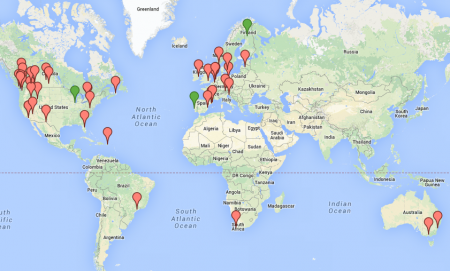
My past (red) and upcoming (green) speaking gigs
I’ve spoken at dozens of conferences and attended dozens more. I’ve been to really good ones, I’ve been to bad ones and I’ve been to some where it was all about the money. We (at Think!) also run our SoMeT conference in the US, Australia and Europe.
Here are my guidelines for picking the right conference:
- Find your peers: the best part of a conference is often the networking. Find conferences where you can connect or reconnect. I remember that from my DMO days. SoMeT, for example, offers more of a community and the conference also serves as a yearly reunion of friends. So ask around, see what your peers will be attending.
- No sales pitches: too many conferences sell presentations, and you’ll end up listening to sales pitches. Avoid conferences where (too many) speakers are also sponsors.
- Look for DMO (or non-vendor) speakers: These people have nothing to sell to you. And case studies are typically the way to learn. The nice thing about our industry is that people share a lot of learning with each other.
- Find presenters you like, don’t look at the title of the presentation: Conference organizers will often make up titles without the presenters’ knowledge. Look for speakers you know and respect. Research the keynote speaker’s blog and see what they’ve posted on Slideshare.
- Avoid too many panels: Panels are hard to pull off. You need a good moderator and engaging panelists. It’s rare when it happens. People are too nice and polite. When I’m on a panel, I make a point of trying to stir things up for that very reason.
Based on the guidelines above, I also design my presentations and avoid any direct sales pitches for Think! I share what I know and what I’ve learned – which is just what I like to see from a presenter. I always, always worry about giving people enough value, not the amount of business cards I collect.
That’s also how we run our SoMeT conferences. We make sure there are plenty of networking opportunities, we don’t sell speaker slots, we invite tons of leading DMOs from around the world to speak and use panels sporadically.
If I had one conference I could attend a year, I would attend a digital tourism conference that follow my rules above.
If I could attend two, I would pick one outside the tourism industry on a specialized topic. So not SXSW for example. I would pick a conference specific to word-of-mouth marketing, social media, UX design, service design, gamification, content marketing, SEO/SEM, etc.
Hope to see you out there soon.
(this post was first published on Tnooz)
I attended over a dozen tourism conferences this year on four continents, including our own #SoMeT conferences. Looking back at the pictures I took and the presentations I’ve downloaded, there’s a common thread and it tells a compelling story about the future of the DMO.
Change is needed
William Price – South African Tourism (#SoMeT13AU)
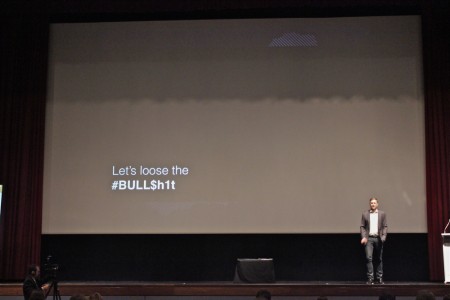
At #SoMeT13AU in Australia, William didn’t mind shaking things up with some provocative quotes including this one. We need to stop doing stuff that doesn’t work and start doing things that do work, and South African Tourism is blazing trails.
What I’ve realized this past year is that we’ve passed the phase where people are skeptical or in denial. We have entered the phase where we are starting to ‘sort out‘ the model, as Clay Shirky calls it. The only things standing in the way are fear, lack of the correct skills and/or not knowing where to start.
The winners aren’t the ones with the biggest budget
Jacques Massardo – Ogilvy Cape Town (#ETAS13)
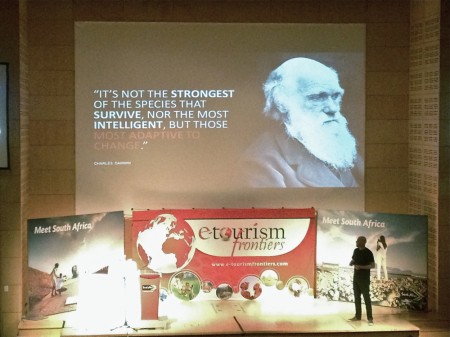
(Please someone correct me if I got the presenter of this slide wrong. I took it at E-tourism Frontiers in Cape Town and forgot who it belongs to.)
I really like this quote because it’s very relevant to what’s going on right now. I see it all around me. The DMOs with the biggest budgets aren’t necessarily the ones who are going to win. They can hide the fact they’re falling behind through big media buys, but there will be a tipping point soon where those who didn’t adapt will have to deal with massive change in a short period of time. And that’s going to hurt. Those who have transitioned and adapted strategically over a period of time will reap the rewards.
By the way, the tipping point is when boards and/or politicians move away from judging activities based on how things look or make them feel, and instead look at the numbers that matter. I’ve started to see early indicators of this already.
The winners are the ones that think outside the box
Heidi Sørvig – Visit Sørlandet (#ENTER2013)
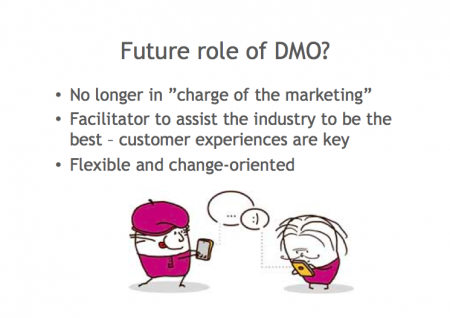
At #ENTER2013 in Innsbruck, Heidi Sørvig from Visit Sørlandet gave a very to the point presentation about how running a DMO in the 21st century really doesn’t have to be that complicated if you’re not afraid to lead, challenge the status quo and make changes.
I’ve been a fan of Heidi’s strategy. It’s very innovative and practical. Her primary KPI is repeat visitation. Because if people come back, it means they like the experience. It also means they will probably recommend the destination to others. She also understands that it’s more efficient to train industry operators about how to manage and market a tourism business than pouring that money into traditional advertising. She has created a program for operators that’s probably the most extensive and sophisticated of any I’ve seen. And all on a small budget.
The winners approach change strategically
Emmanuelle Legault – Tourisme Montréal (#SoMeT13AU)
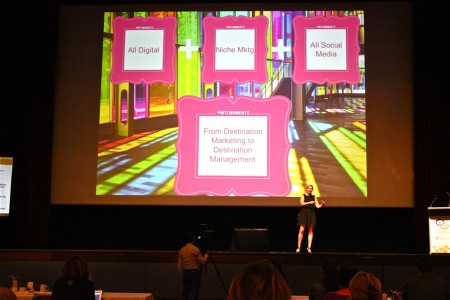
Tourisme Montréal (a Think! client) has been one of the most innovative DMOs in the ‘big city’ category for years. With leaders like Emmanuelle, TM is not afraid to challenge the status quo, take risks and experiment. I admire her courage because she wants to do what’s right. At #SoMeT13AU, Emmanuelle shared how they’ve been transitioning from a Destination Marketing Organization to a Destination Management Organization over the last few years and how they have dealt with some of the obstacles.
The winners understand to let go of control
Frédérick Ranger – Tourisme Montréal (#SoMeT13US)
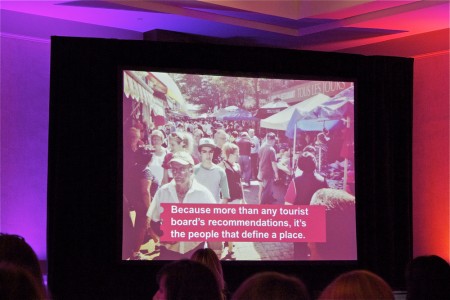
Accepting that a DMO doesn’t create a brand, but consumers do was one of the common threads at #SoMeT13US. This is a major shift for many marketers who are used to keeping a brand under tight control. At Tourisme Montréal, one of their guiding principles is to let go. Fred gave a passionate presentation in which he demonstrated how Tourisme Montréal is implementing programs and campaigns that deliver on this principle.
The winners understand the consumer
Donna Moritz – Social Media Strategist at Socially Sorted (#SoMeT13AU)
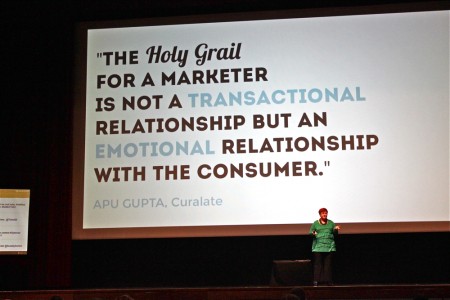
Donna shared this wise quote from Apu Gupta. What it means is that the transaction will happen as a result of an emotional relationship, and one that grows over a long period of time. It sits at the essence of most modern marketing philosophies including social media, content marketing and permission marketing. In the tourism industry, however, we often seem to be chasing the next “head in bed” or “bum in seat”. Tactics are focussed on the short-term, but we need to take a long-term view to build reputation and loyalty over time.
The winners measure the right things
Andrew Pozniak – Kuoni (#ENTER2013)
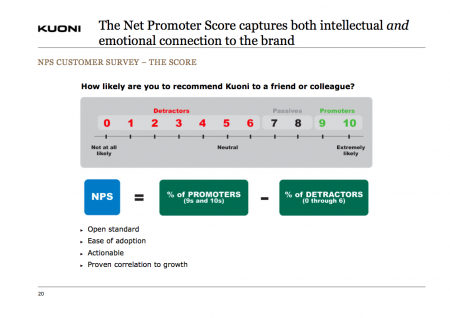
Kuoni is a very large luxury travel brand. In many ways they are very traditional, but I’ve seen a few presentations from them now and the way they go about things will set them up perfectly for the future…if they get their online strategy right.
Kuoni places a lot of value in NPS (Nett Promotor Score) and they measure this at different stages of the customer journey. I like this slide because it’s almost identical to one I use. NPS is the best quantitive measure for the overall destination experience. The science behind NPS shows a correlation between NPS score, loyalty, referral and corporate growth. It’s also easy to do.
The winners take charge of designing the destination experience
Marc Stickdorn – Think! Hangout
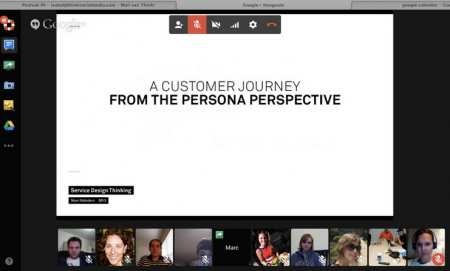
Marc is one of the real thought leaders for service design. He co-authored a book called This is Service Design Thinking and now runs My Service Fellow and Smaply. I’ve known him for a few years and he was kind enough to do a presentation about service design for the Think! team over Google Hangout. Service Design is a methodology, process and a set of tools that will deliver on this objective, just like Information Architecture, Usability and Interaction Design for websites.
Now that we need to build a brand on the ground, through stories people tell, a DMO needs to design the end-to-end destination experience. By using the dollars typically spent on advertising to work on designing the complete destination experience, people will have a better destination experience. As a result, your NPS score, the stories people tell, repeat visitation and referrals will go up.
The winners build their brand through the experience on the ground
Gregg Sauter – Saskatchewan Roughriders (#HostSK2013)
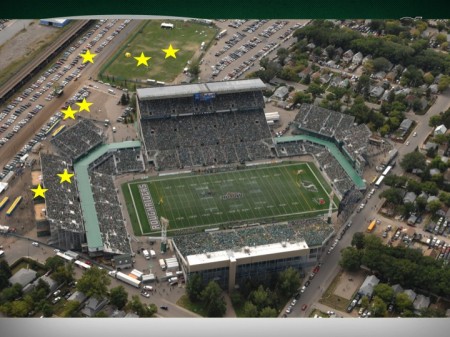
The Saskatchewan Roughriders (a Think! client) have a strong brand and very loyal following. Gregg explained at Host Saskatchewan that they way they’ve built their brand is primarily around experience. The result is incredible: 2/3rds of all merchandise sales in the Canadian Football League are for his team.
This slide maps some of the touch-points with their customers before the game even starts, from the parking attendant to the stadium host. Mapping the customer journey like this is part of the service design process. It’s the starting point to examine, benchmark and redesign critical touch points where required.
The winners constantly experiment, measure and adjust
Jori Kirk, Cypress Hills Eco-Adventures Ltd (#HostSK2013)
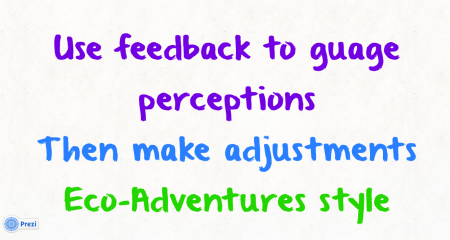
Jori operates an adventure tourism business in Saskatchewan, Canada. I loved his presentation during which he described the keys to his success. As a small business owner, he keeps things simple and focused. He does this by cleverly using technology, offering value while embodying the right corporate values and engaging staff (mostly guides) to empower them and make the experience awesome for the customer. The result is a runaway success.
Jori understands the story his customers what to be part of, how to deliver it and and how to get the story told. If he misses the mark, he will adjust elements to fix the plot of the story.
The winners add real value to the consumer
Jay Baer – author of Youtility: Why Smart Marketing Is About Help not Hype (#SoMeT13US)
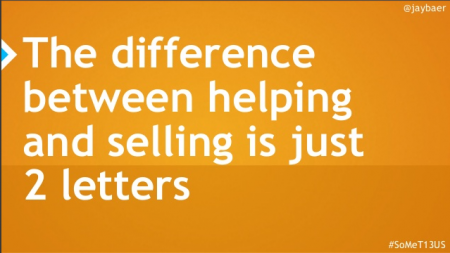
Jay Baer‘s message is all about creating value for the consumer. You can’t compete for attention anymore and the best way to gain trust is by adding true value to people’s life. He wrote a good book about it.
It’s not hard to figure out how this applies to travel. Great customer service is key and visitor centres have traditionally facilitated a way for DMOs to deliver it. But customer service has moved outside of those four walls and a roof. Customer service now happens online, on Twitter, Facebook and message boards in all stages of the customer journey.
The winners will engage their network
Sarah “Sos” Mattsson – Tourism and Events Queensland (#SoMeT13AU)
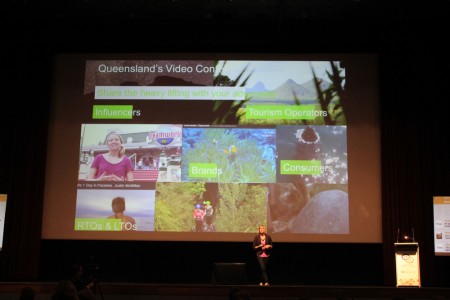
While presenting their online video content strategy for Tourism and Events Queensland at #SoMeT13AU, Sos explained how they have identified key groups of video content producers and described how they fit into their strategy.
It’s important to recognize who the main groups of storytellers are and creating strategies that will help get the best stories out there. It’s also a great way to scale customer service. For example, TripAdvisor destination experts are doing customer service work for free.
The winners market to niches that matter
Catherine Bates, General Manager Brand and International PR, Tourism New Zealand (#TEEC)
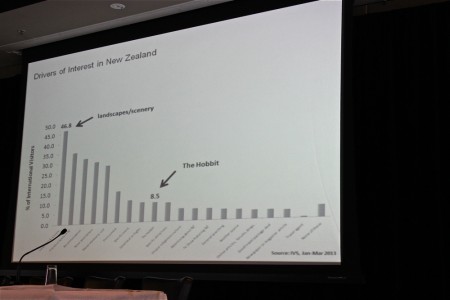
Catherine presented Tourism New Zealand’s three-year strategy to leverage the Hobbit movies as a niche marketing opportunity. Even though it’s very traditional (and I wish I could make it social at the core), it’s a perfect example of marketing to a niche audience. For example, Catherine shared the fact that while only 1% of visitors to the city list the Hobbit as a primary reason for a visit, but it still represents $33M.
Focussing on a niche creates big opportunities because you can narrow your focus. Engaging a niche audience via their passions is much easier because it’s very relevant to them. And when you do it right, they will respond by sharing and influencing friends.
The winners empower staff
Kate Duffy – Canadian Tourism Commission (#SoMeT13AU)
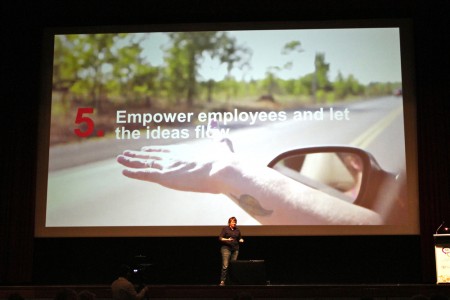
Kate described the Canadian Tourism Commission’s social media journey. When a consumer is social, a brand needs to be social as well, and that will ultimately lead to a social business.
A social business will be the end game – we call it a Level 5 DMO. Organizationally, it means letting of the control internally. The rate of change is only going to increase and as the role of the DMO changes and marketing becomes real-time, it’s really important to reduce bureaucracy and empower staff. It might sound scary but you’ll be surprised to what level people will rise to when they feel a sense of responsibility and empowerment.
The winners enable change from within
Jesse Desjardins – Tourism Australia
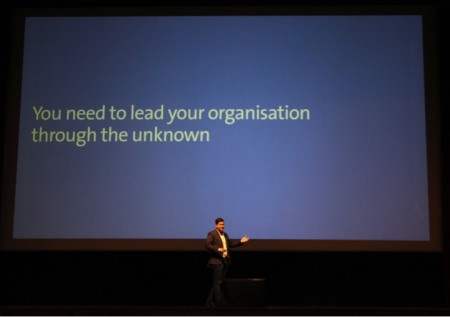
At #SoMeT13AU Jesse from Tourism Australia shared some of the strategies and approaches to managing the largest DMO Facebook page in the world. It’s very practical and another demonstration that it doesn’t have to be complicated. Just like Kate, Jessie also promoted the fact that it is the responsibility of the people within the organization to champion changes.
For DMO leaders, my advice is to listen to the teams that are running your digital and social platforms. There is an incredible amount of talent out there and you need to use it. I’ve seen good people walk away out of frustration and that hurts all of us. Support your staff and take some risks. Let them create a plan. Park your skepticism, and invest in the future. Learn. And share it with your industry so they understand your new role better. Start the journey so you can manage it over time.
For DMO staff, be an advocate. Find opportunities to create proof of concepts and promote them internally. Help your leaders and your industry understand what is the most efficient and effective way of destination management. Things won’t change by waiting for somebody up top to do the right thing, be pro-active and promote successes.
Conclusion
This year was an exciting year. Many DMOs have done incredible things and I’ve learned so much. I’ve seen many more great presentations I didn’t include here. The future of the DMO is bright, as long as we let go of sacred cows, let go of fear, create a plan to move forward, learn and adjust as we go.
Where to start? Benchmark your current activities, set clear objectives and create a strategy. At a minimum, create a plan for next year to start moving in the right direction.

““A goal without a plan is just a wish.”
― Antoine de Saint-Exupéry”
The end of the year is approaching fast. And as you start to look towards the new year let me ask you what your plans are for your social media in 2014?
Social Media has become an important part of the DMO marketing mix and it’s time to take a serious approach. At the moment there’s a lot of good work happening but most of it is approached in an ad-hoc or intuitive way. In order to bring your marketing to the next level it’s time to create a plan. We see the best results from clients who have spent the time to create a plan for social media activities and with 2014 approaching fast, why not create one now?
At the bare minimum, set specific goals for 2014 and assign some budget and human resources against it. Then identify specific activities throughout the year to achieve those. Some will be year-round, other will be time-based (campaigns). Set specific targets for each so you can track progress. Then evaluate your progress every quarter and make adjustments where needed.
Even with a simple plan, you’ll find you will spend your energy much more efficient because you’re focussed. As an agency we appreciate it as well because we can help you build the plan and plan our activities throughout the year instead of focussing on one-off projects.
Just drop us a note and we’ll get you started.
« Previous Entries